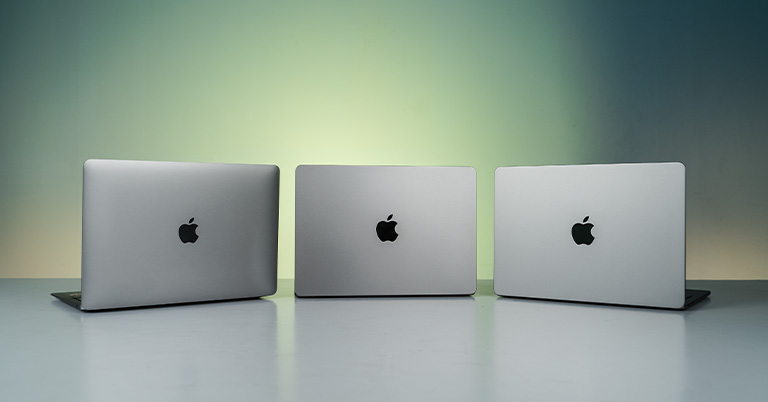
MacBook Air M3, M2, and M1 Compared: Which Model Fits Your Needs?
Price in Nepal
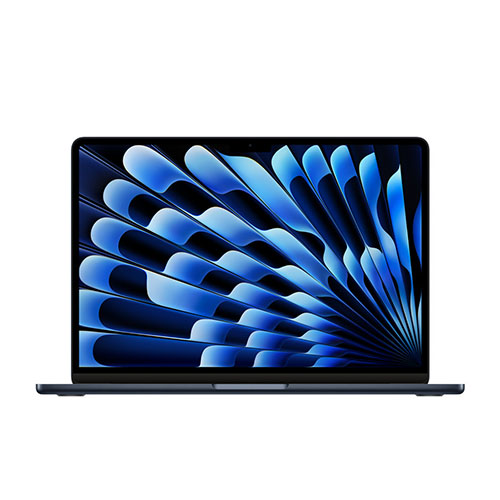
Apple MacBook Air M3 13-inch
Rs 1,42,000
Best deals in Nepal
Finding the best deals
Checking stores across Nepal for live prices.
Key Takeaways
- M1 model priced at NPR 115,000 offers reliable performance for basic tasks
- M3 brings minor upgrades such as dual display support and Wi-Fi 6E
- M2 can often be found discounted around NPR 155,000 with configurable upgrades
- All models share premium build quality and excellent keyboards/trackpads
- M3 shows slight efficiency gains but may not justify upgrade for most users
When choosing among Apple's MacBook Air lines equipped with the M1, M2, and M3 chips, buyers face a nuanced decision. Each model delivers strong performance and portability, but subtle differences may guide your choice based on budget and intended use.
Design and Build Quality
All three MacBook Air generations exhibit Apple's signature premium construction. The M1 model retains a slightly older tapered design, while the M2 and M3 adopt a squared-off silhouette. Despite these aesthetic shifts, build quality remains consistent across models. The M2 and M3 versions are marginally thinner and lighter, offering a tangible yet minor improvement in portability. A key distinction for the M2 and M3 models is the inclusion of MagSafe charging, enabling uninterrupted Thunderbolt connections during power use—a feature absent in the M1 model.
Display Capabilities
Display quality sees a noticeable jump from the M1 to its successors. The M1 model tops out at 400 nits brightness, adequate for indoor use but less suitable for bright environments. In contrast, both the M2 and M3 models achieve 500 nits, providing better visibility in varied lighting conditions. Color accuracy and contrast are strong across all models, though the M2 and M3 offer richer visuals that most users may barely notice. The M1 model suffers from thicker screen bezels, but these become less obtrusive during regular use.
Camera and Audio Enhancements
Video conferencing benefits significantly move from the M1 to newer models. The M1 utilizes a 720p camera, resulting in lower image quality compared to the 1080p cameras in the M2 and M3 models. The M3 model further refines audio with improved voice isolation, reducing background noise during calls—a feature technically present but functional on earlier Apple silicon models. Speaker quality also improves markedly in the M2 and M3 models, delivering richer and louder audio for media consumption.
Performance Insights
Raw processing power escalates consistently from M1 to M3, though real-world gains are modest for typical users. The M1 chip, despite being nearly four years old, handles everyday tasks effortlessly. The M2 offers an approximate 18% CPU and 35% GPU speed boost over the M1, while the M3 provides incremental improvements—around 17% better single-core CPU performance compared to the M2 in benchmark testing. However, these performance jumps matter primarily for specialized workloads like 3D rendering or demanding applications. In everyday use, all three models feel responsively smooth.
Gaming performance sees meaningful enhancement with the M3, particularly in AAA titles benefiting from its updated GPU architecture. Titles such as Resident Evil 4 run with smoother frame rates and improved graphics effects enabled by hardware-based mesh shading and dynamic caching. Still, MacBook Airs remain better suited for casual gaming than intense gaming sessions.
Battery Life Evaluation
Battery endurance remains excellent across all models, with Apple claiming up to 15 hours of web browsing for each. The M3 introduces a dedicated AV1 video decoder, promising prolonged streaming sessions. Testing confirms this advantage: continuous 1080p YouTube playback drains only 6% battery on the M3 over an hour, compared to 9-11% on the M1 and M2 models. This translates to potentially longer viewing sessions, especially for media-heavy users.
Value Assessment
Priced at NPR 115,000, the M1 MacBook Air presents exceptional value for users prioritizing affordability without compromising core performance. The M2 model, often available discounted around NPR 155,000, allows configuration upgrades—particularly memory expansion—providing more flexibility for growing needs. The M3 model, priced at NPR 184,900, introduces niche improvements like dual external display support and Wi-Fi 6E connectivity. However, its incremental gains may not justify the cost for most users, especially considering the base configuration still limits memory to 8GB and storage to 256GB.
Final Recommendation
For budget-conscious buyers seeking solid performance, the M1 MacBook Air remains a compelling choice. Users weighing the M2 and M3 models should prioritize intended use: the M2 offers better value through configurable upgrades when found on sale, while the M3 suits those desiring the latest features and marginal efficiency benefits, provided they accept its higher cost and base configuration limitations.
Key specs
| Memory | 8/16/24GB unified |
| Price | NPR 115,000 (M1), NPR 155,000 (M2), NPR 184,900 (M3) |
| Display | 13.3 inch |
| Storage | 256GB, 512GB, 1TB, 2TB |
| Camera | 720p (M1) or 1080p (M2, M3) |
| Battery | 49.9 Wh (M1), 52.6 Wh (M2, M3) |
Want to compare this device with others?
Compare