Top AI Video Generation Tools to Watch in 2026
Key Takeaways
- Five leading AI video tools reviewed with pricing and key features
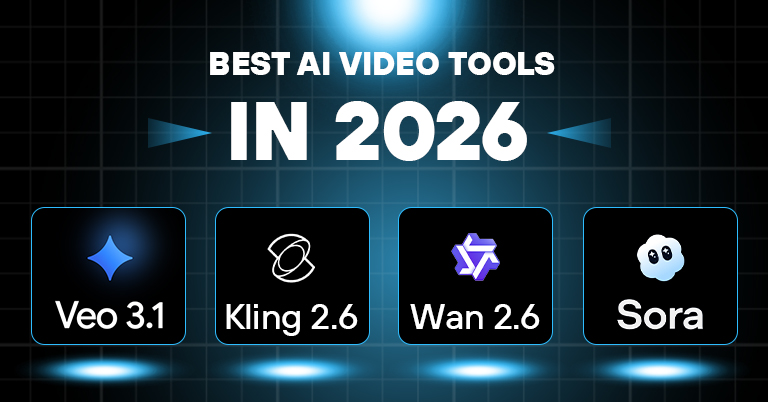
- Tools range from Google's Veo 3.1 with 4K upscaling to OpenAI's Sora 2 with 25-second generation
- Each platform balances unique advantages with specific limitations
- Practical use cases span education, social media, and professional editing workflows
- Subscription models vary widely from free tiers to premium enterprise plans
Top AI Video Generation Tools to Watch in 2026
The rapid evolution of AI video technology continues to reshape content creation landscapes. As we move through 2026, several platforms now offer remarkably convincing synthetic footage, bridging the gap between computer-generated scenes and traditional cinematography. Below we examine five of the most compelling tools currently available, evaluating their capabilities, limitations, and value for Nepali creators.
Veo 3.1
Google's entry into AI video generation via Gemini and enterprise services, Veo 3.1 stands out for its text-to-video approach with native audio support and strong character consistency across shots using reference images. It currently ranks as the first mainstream model capable of 4K upscaling, though it relies on reconstruction rather than true 4K capture. The system shines in controlled cinematic environments, such as tracking shots of office settings with accurate sound design, but struggles with fast action sequences where complex physics breaks down. Pricing begins at USD 19.99/month for basic access with 8-10 videos, while the true 4K experience requires the USD 249.99/month Ultra tier. API usage costs between $0.10 and $0.40 per second.
Kling 2.6
Developed by Chinese firm Kuaishou, Kling 2.6 integrates audio generation directly into its architecture, enabling phoneme-level lip synchronization across multiple languages including Chinese, English, and Korean. This feature allows characters to speak with properly moving mouths—a notable achievement in AI video. The platform excels at stylized content and action sequences, producing convincing motion blur and ambient sounds, though it falters with human subjects. Testing revealed inconsistent dialogue quality, particularly in English, where speech often sounded robotic or garbled. Pricing operates on a credit system: a free tier offers 66 daily credits, while premium plans range from $10/month for 660 credits to $180/month for 26,000 credits. Credit consumption varies widely depending on video complexity.
Wan 2.6
Alibaba Cloud's Wan 2.6 focuses on multi-shot storytelling rather than isolated clips. It automatically coordinates wide shots, close-ups, and reaction sequences within a single generation, maintaining coherent pacing and character consistency. The “Starring” feature allows users to cast reference characters into new scenes, supporting up to 15 seconds of 1080p video with synchronized audio. While it requires narrative thinking and often produces conventional structures, it helps amateur filmmakers achieve basic cinematic flow. Access is fragmentled across platforms: through Alibaba Cloud Model Studio or third-party providers like PiAPI, where 1080p generation costs approximately $0.12 per second. A 15-second 1080p clip with audio averages $1.125-$1.80.
Seedance 1.5 Pro
ByteDance's Seedance 1.5 Pro specializes in audio-visual synchronization, generating sound and image simultaneously rather than combining them afterward. Its standout capability is multilingual lip-sync across Mandarin, English, Japanese, and other Asian languages, producing precise phoneme matching and emotional expression tracking. Ideal for character animation, dance sequences, and performance content, it maintains stable backgrounds during movement. However, the system shows weakness in non-performance scenarios like landscapes. Pricing via BytePlus/Volcano Engine API starts at $1.20 per million tokens, with third-party platforms offering plans from $18/month for ~40 videos to $60/month for ~200 videos. Free trials exist but come heavily restricted.
Sora 2
OpenAI's Sora 2 builds on its groundbreaking 2024 predecessor, positioning itself as the most functional AI video tool available today. Emphasizing physical accuracy and world simulation, it introduces a “Cameos” feature allowing users to insert personalized likenesses into generated scenes. Accessible through a dedicated social iOS app reminiscent of TikTok, it supports up to 25 seconds per video on Pro tiers—the longest among mainstream models. Testing demonstrated strong physics simulation for realistic effects like water splashing and fabric movement, though reliability varies: some generations nailed complex dynamics while others ignored basic physics like gravity. Access now requires paid ChatGPT subscriptions: Plus ($20/month) offers 1,000 credits for 720p, 5-second videos with watermarks, while Pro ($200/month) provides 10,000 credits and unlimited relaxed-mode generation.
Final Thoughts
None of these platforms achieves perfection, each bringing distinct strengths suited to particular workflows and frustrating compromises. Professional creators in 2026 typically combine outputs—using Veo for B-roll, Seedance for character performance, Kling for action sequences, and traditional editing software for final assembly. Far from replacing traditional videography, AI video tools have expanded the creative toolkit, offering new options packed with unique quirks and trade-offs.