Nepal's Aspiration to Develop a National Large Language Model: Feasibility and Considerations
Key Takeaways
- Nepal ranks 109th globally in AI readiness, indicating substantial ground to cover
- Building an LLM demands extensive computational power and infrastructure
- Alternative strategies, such as targeted AI applications and educational development, may offer more immediate benefits
- The success of the initiative hinges on strategic choices about in-house development versus leveraging existing technologies
Nepal's Ambitious Push for a Domestic Large Language Model
The Nepalese government has announced a bold initiative to develop a Large Language Model (LLM) tailored for the Nepali language. This revelation, made by Deputy Secretary Narayan Timalsina during the “AI for Nation's Development” event, has generated both enthusiasm and doubt regarding its practicality and potential impact.
Current State of AI in Nepal
The announcement occurred at a seminar hosted by the Nepal Academy of Science and Technology (NAST) and the Curriculum Implementation and Technology Subject Committee. Several authorities shared insights into Nepal’s present AI capabilities:
- Dr. Rabindra Prasad Dhakal from NAST noted that Nepal holds the 109th position worldwide in AI readiness, underscoring the need for substantial progress.
- MoCIT Joint Secretary Anil Kumar Dutta elaborated on current endeavors to establish regulations for AI development.
- NAST Academician Prof. Dr. Subarna Shakya discussed the potential benefits and obstacles that AI presents.
- Prof. Dr. Dilip Subba emphasized the importance of a comprehensive AI policy to steer development effectively.
Entering the Global LLM Arena
The worldwide AI competition is intensifying, with even smaller nations striving to secure their position. For instance, China’s Deepseek, with an estimated budget of roughly $5 million—considerably less than investments by Silicon Valley giants—succeeded in creating a competitive LLM. This demonstrates that smaller economies can participate in the AI arena. However, even these “modest” budgets remain substantial for a country like Nepal.
Capabilities and Limitations of Current LLMs
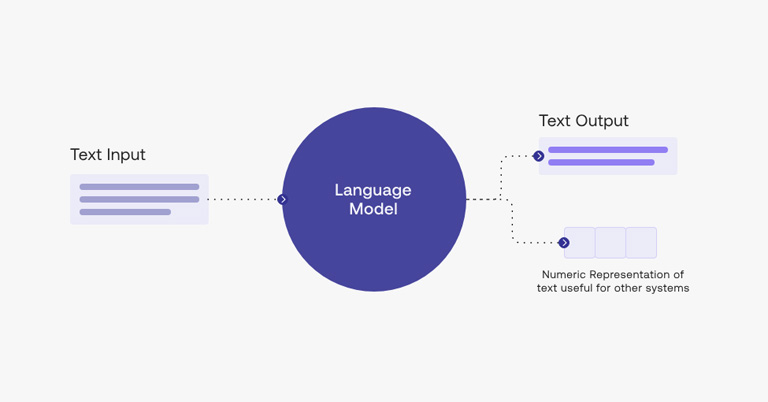
Today, language models drive various applications, from chatbots and virtual assistants to content creation and data analysis. Nevertheless, they have notable shortcomings:
- Creativity remains formulaic: AI-generated content often lacks genuine creativity and feels automated.
- Cultural nuances are challenging: Many models struggle to accurately handle regional dialects and contextual subtleties.
- Accuracy cannot be assured: Human oversight remains essential to prevent the spread of misinformation.
- Computational demands are enormous: Training and operating LLMs necessitate powerful hardware and significant energy resources.
Obstacles to Nepal’s LLM Ambitions
While Nepal’s aspirations in AI are commendable, constructing an LLM from the ground up presents formidable challenges:
- Insufficient computing power: Developing an LLM requires vast server farms, high-performance GPUs, and considerable energy. Although Nepal possesses hydropower resources, the required infrastructure is uncertain.
- Intense global competition: The AI domain is dominated by established corporations with extensive experience and financial backing. Catching up will be a daunting task.
- Questionable resource allocation: Allocating funds to a general-purpose LLM might divert resources from more targeted AI initiatives that could directly enhance Nepal’s economy.
Strategic Alternatives for Nepal
Rather than committing entirely to a large-scale LLM, Nepal might achieve greater outcomes by considering these alternatives:
- Specialized AI applications: Focusing AI efforts on sectors such as agriculture, tourism, or healthcare could yield more immediate and impactful results.
- Strengthening AI education and research: Building local expertise may prove more valuable over the long term than a single technological product.
- Formulating supportive AI policies: Intelligent regulations can foster innovation while safeguarding users.
- Collaborating with international AI projects: Partnerships could enable Nepal to benefit from cutting-edge AI advancements without starting from scratch.
- Enhancing Nepali language processing tools: Improving language processing systems that integrate with existing models may be a more practical step than developing a full LLM.
Concluding Thoughts
Nepal’s interest in AI represents a positive movement forward. However, genuine technological advancement does not always involve building everything independently. Strategic decisions regarding which elements to develop domestically and which to adapt from existing technologies may be crucial for harnessing AI effectively in Nepal. Whether this LLM project evolves into a triumph or a costly misstep remains to be determined.