Nubia V80 Design Review: A Stylish Budget Phone with Reliable Performance
Key Takeaways
- Priced at NPR 22,499 for the 8/128GB model and NPR 25,499 for the 8/256GB variant
- Boasts a premium design with an IP64 rating and a 120Hz HD+ display
- Delivers smooth software and decent battery life, ideal for everyday use
Nubia V80 Design Review: A Stylish Budget Phone with Reliable Performance
The Nubia V80 Design makes a strong impression with its premium-inspired aesthetics and smooth Android 16 software, delivering reliable daily performance at a budget-friendly price. In a market where finding quality devices in the NPR 20,000–25,000 range is increasingly difficult, this phone focuses on design, clean software, and a seamless everyday experience.
Design and Display
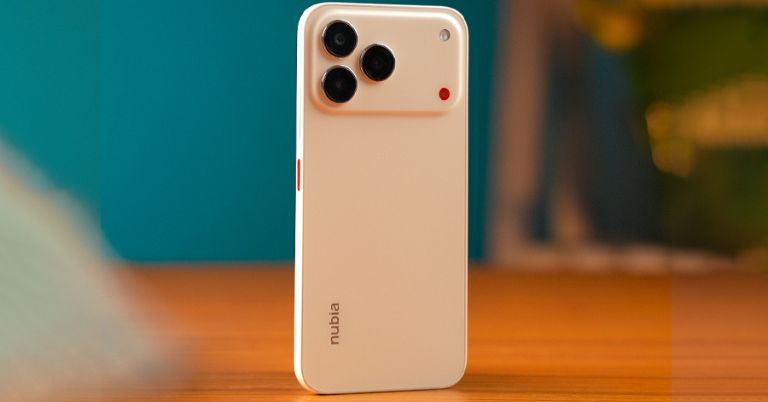
The Nubia V80 Design immediately catches attention with its elegant, flagship-like appearance. It closely resembles the iPhone 17 Pro Max in its camera module design and overall premium look. Despite this stylish exterior, the build quality remains solid for its price range, and the phone carries an IP64 rating for dust and water resistance. On the front, it sports a 6.75-inch IPS LCD HD+ display with a smooth 120Hz refresh rate. While a Full HD panel would have been preferable at this price, the display performs well for everyday tasks. Viewing angles are adequate, brightness levels are decent, and scrolling through apps such as Facebook, TikTok, and Instagram feels smooth. YouTube playback supports up to 1080p, although overall sharpness remains average.
Performance and Software
Under the hood, the Nubia V80 Design is powered by the Unisoc T7280 processor. Although not a high-performance chipset, it handles everyday tasks like browsing, messaging, and light multitasking without significant lag. PUBG can be played at minimum graphics settings, but the phone is best suited for casual use rather than heavy gaming. The side-mounted fingerprint sensor is fast and accurate, and the inclusion of a 3.5mm headphone jack—a feature becoming rare—is a welcome addition for audio enthusiasts.
One of the standout features of this phone is its software experience. It runs Android 16 out of the box with Nubia’s MyOS interface, which feels clean and close to stock Android. The UI is smooth and uncluttered, with practical AI features such as Circle to Search and Google Gemini built-in. An AI Memories feature, similar to those found on more expensive OnePlus devices, is also included. Additionally, a customizable side button dedicated to triggering AI functions adds a unique touch to the user experience.
Camera and Battery
On the camera front, the Nubia V80 Design features a dual-camera setup with a 50MP main camera and a 2MP depth sensor, along with a 16MP front camera. In well-lit conditions, photos come out detailed and vibrant, making portraits and selfies suitable for social media. However, video recording is limited to 1080p and lacks proper stabilization, resulting in shaky footage when moving.
The phone is equipped with a robust 5000mAh battery that easily lasts a full day of regular use, including social media browsing, YouTube playback, and camera testing. It supports 22.5W wired charging, which is reasonable for its price segment.
Verdict
Overall, the Nubia V80 Design proves to be a well-rounded budget smartphone that prioritizes style and usability. Its premium-inspired design, smooth software experience, and thoughtful features such as AI tools and a side-mounted fingerprint sensor make it a strong contender in its price range. While it makes some compromises on display sharpness, video stabilization, and gaming performance, it excels as a daily driver for social media, multimedia, and casual photography. For anyone seeking a stylish, reliable phone without breaking the bank, the Nubia V80 Design is definitely worth considering.
Key specs
| Price | NPR 22,499 (8/128GB), NPR 25,499 (8/256GB) |
| Display | 6.75-inch FHD+ IPS LCD, 120Hz |
| Charging | 22.5W |
| Front Camera | 16MP |
| Storage | 128GB or 256GB |
| Battery | 5000mAh |
Want to compare this device with others?
Compare