OnePlus 15R Review: Powerhouse Performance With a Battery to Last Days
Key Takeaways
- massive 7400mAh battery offers exceptional endurance and 80W fast charging
- Snapdragon 8 Gen 5 chipset delivers flagship-level performance in everyday tasks and gaming
- Camera quality is average, with faded colors and lack of zoom capabilities
- Premium design with IP69K rating and smooth OxygenOS 16, but priced competitively against rivals
- Best suited for users prioritizing battery life and performance over photography
The OnePlus 15R has landed in Nepal, positioning itself as a performance-focused device with an enormous battery, available just under NPR 1 lakh. While it shares several design cues with the flagship OnePlus 15, including a robust IP69K rating and a premium glass-and-metal build, it also carries a price bump of NPR 19,500 over last year's model, reflecting rising component costs in the Nepali market.
In my ten days with the phone, the most standout feature is undoubtedly its battery. The 7400mAh cell easily stretches to around ten hours of screen-on time daily, and up to twelve hours on lighter days. With the optional 100W charger available for NPR 1,499, charging from zero to full takes roughly fifty-five minutes, making it quick enough for most users. However, the absence of wireless charging may deter some, though I found this acceptable given the phone's other strengths.
Performance is another highlight, powered by the Snapdragon 8 Gen 5 chipset. In everyday use, app launches are swift, multitasking is smooth, and gaming performs exceptionally well. Titles like PUBG and Genshin Impact run stably at high frame rates, and even demanding games such as Call of Duty can hit 165 FPS with adjustments. Thermals remain well-managed, never exceeding 40°C during extended sessions.
The display, a 6.83-inch AMOLED panel with a 165Hz refresh rate, delivers vibrant colors and ample brightness, though it appears slightly cooler in tone compared to the OnePlus 15's warmer display. While it lacks LTPO technology found in last year's model, the phone's stellar battery life compensates for this in most scenarios.
On the software front, OxygenOS 16 brings a polished, responsive experience with four years of Android updates and six years of security patches. The inclusion of an ultrasonic fingerprint sensor enhances the overall user experience, offering fast and reliable unlocking.
However, the camera department is a clear letdown. Despite the phone's near-lakh price tag, the imaging capabilities fall short. Photos often appear faded or overly contrasty, with poor edge definition in ultra-wide shots and significant noise in low-light conditions. The absence of a telephoto lens and macro capabilities further limits photographic versatility. While selfies and 4K video recording are passable, they fail to stand out against competitors.
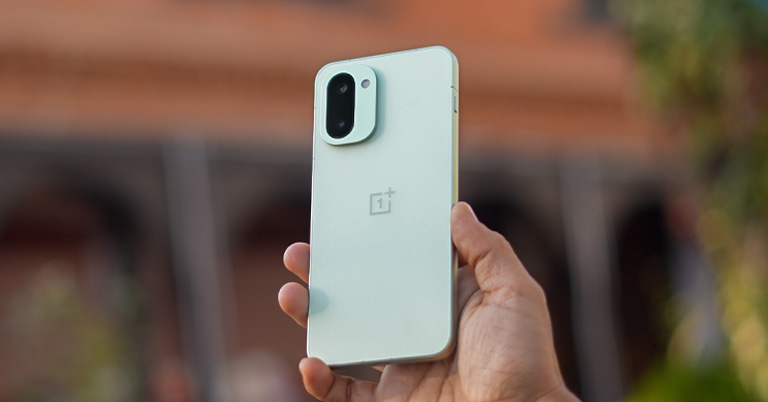
Design-wise, the 15R is slightly larger than the OnePlus 15 but retains a premium feel with a glass rear and aluminum frame. A dedicated button on the left edge provides quick access to screenshots and voice memos, a feature I appreciated during daily use. However, the switch to a USB 2.0 port and the lack of eSIM support are notable regressions.
Priced at NPR 98,499 for the 12/256GB variant and NPR 106,99 for the 12/512GB model, the OnePlus 15R competes directly with devices such as the Nothing Phone 3, Samsung Galaxy S25 FE, Honor 400 Pro, and Poco F8 Pro. For users who prioritize endurance and processing power above photography, it presents a compelling case. However, if camera performance is a priority, alternatives like the Nothing Phone 3 or Galaxy S25 FE may offer better value in this price bracket.
Key specs
| Price | NPR 98,499 (12/256GB), NPR 106,99 (12/512GB) |
| Display | 6.83-inch AMOLED, 1.5K (2,800 × 1,272 pixels), 165Hz refresh rate, 1,800 nits peak brightness, Dolby Vision, HDR10+, DC dimming |
| Storage | 256GB/512GB UFS 4.1 |
| Camera | 50MP main (OIS, f/1.8, 24mm), 8MP ultrawide (f/2.2, 16mm), 32MP front |
| Battery | 7400mAh with 80W fast charging |
| Processor | Qualcomm Snapdragon 8 Gen 5 (3nm) |
Want to compare this device with others?
Compare