Critical Security Flaws Impacting Modern Processors and How to Protect Your Devices
Key Takeaways
- Two major security flaws, Meltdown and Spectre, threaten devices with Intel, AMD, and ARM processors
- These vulnerabilities allow attackers to access sensitive data by bypassing security barriers
- Patches are available from major tech companies, though some may reduce device performance
- Detection is difficult as affected devices appear to function normally
- Users should apply available updates promptly to protect their devices
Critical Security Flaws Impacting Modern Processors and How to Protect Your Devices
Recent discoveries have revealed two serious security vulnerabilities, named Meltdown and Spectre, which affect a broad spectrum of modern computing processors. These flaws enable potential attackers to bypass critical security protections and gain unauthorized access to sensitive information stored in device memory, posing a significant risk to user privacy and data confidentiality.
Understanding Meltdown and Spectre
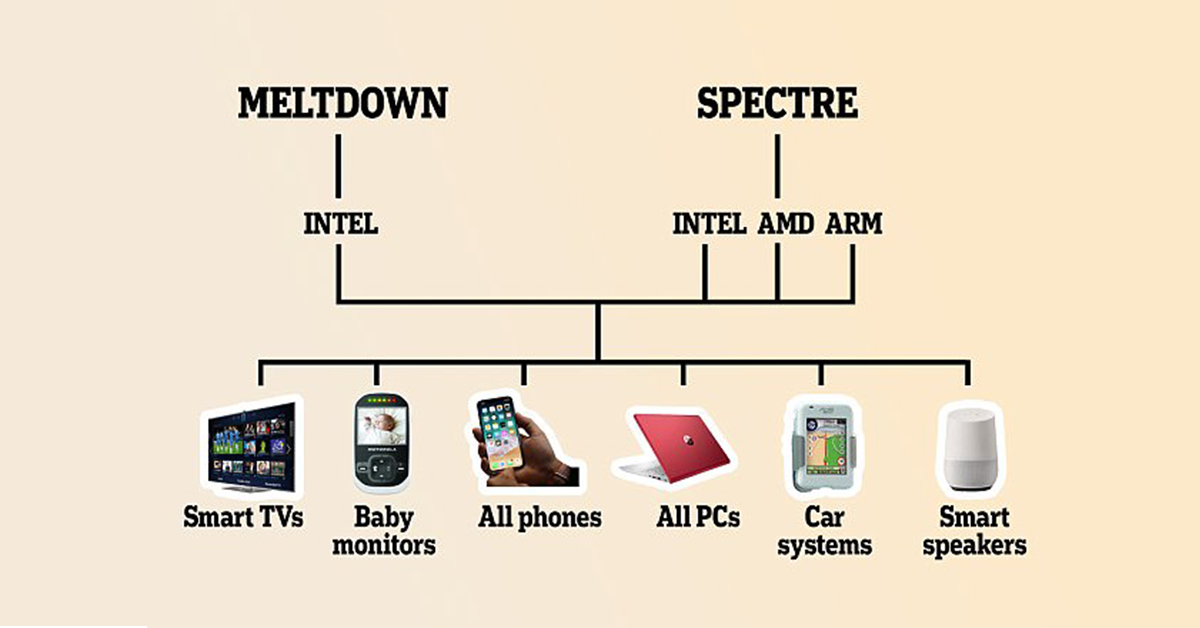
Meltdown specifically targets Intel processors, affecting virtually all Intel chips produced since 1995. This vulnerability breaks the isolation between user applications and the operating system, allowing malicious actors to access protected memory areas. It is identified by the code CVE-2017-5754.
Spectre, on the other hand, impacts processors from Intel, AMD, and ARM. Unlike Meltdown, Spectre attacks the interaction between user applications, making it a more widespread threat. It carries the identification codes CVE-2017-5753 and CVE-2017-5715. Although AMD has asserted that its chips are not vulnerable to Meltdown, both vulnerabilities present serious concerns for device security across multiple processor architectures.
Risks and Detection Challenges
Both Meltdown and Spectre enable cybercriminals to potentially extract passwords, personal data, and other confidential information from affected devices. A particularly troubling aspect of these vulnerabilities is their difficulty to detect. Devices infected with these flaws typically exhibit no unusual behavior, and conventional antivirus software cannot easily identify the threats, as they differ significantly from typical malware. While antivirus programs may detect malware that exploits these vulnerabilities, the underlying flaws themselves remain concealed.
Vendor Responses and Available Patches
Major technology companies have responded with patches to address these security issues:
- Google has released security updates to protect its systems and cloud services.
- Microsoft has provided patches for Windows 10, with updates for older versions pending release.
- Apple, although not issuing an official statement, suggests that macOS 10.13.2 offers protection for Mac devices.
- Linux distributions have implemented kernel patches, though these updates may result in reduced system performance.
- Amazon Web Services has also applied patches to secure its cloud platforms, along with Google Cloud Platform and Microsoft Azure.
- Chromebooks have been updated with OS version 63 to mitigate these vulnerabilities.
Recommendations for Users
To safeguard your devices against these threats, it is crucial to install the available patches as soon as possible. If updates are not yet available for your specific device or operating system, remain in contact with your OS provider and device manufacturer for future security releases. Proactive measures and timely updates are essential to minimizing the risk posed by Meltdown and Spectre.
*Last updated: November 25, 2025