Understanding Qualcomm Quick Charging: From Early Versions to Future Tech
Key Takeaways
- Quick Charge technology boosts charging speed by using higher voltages until the battery reaches 60-80% charge
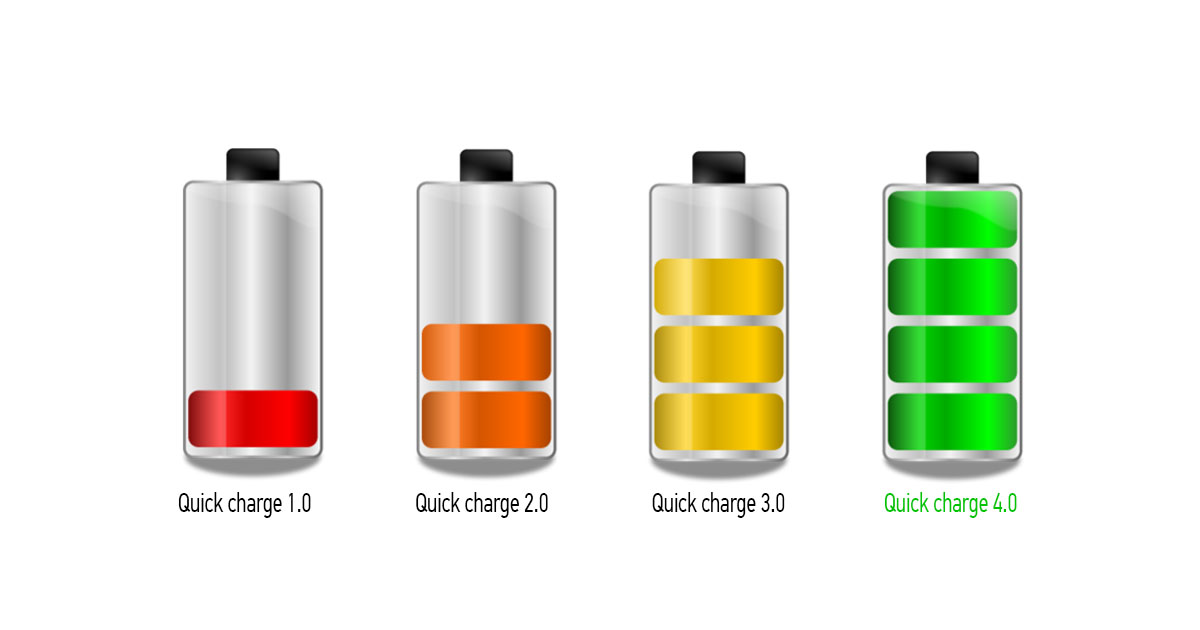
- Versions 1.0 through 3.0 have progressively increased speed and efficiency, with QC 3.0 offering double the speed of QC 1.0
- Quick Charge 4, expected in 2017 with the Snapdragon 835, promises 20% faster charging and reduced heat build-up
- Effective Quick Charging requires both the phone and charger to support the technology
- Devices ranging from the Samsung Galaxy S III to the Xiaomi Mi 5 utilize various Quick Charge versions
Understanding Qualcomm Quick Charging Technology
Smartphones have evolved dramatically, packing in more features and requiring longer usage times. This increased demand pushes batteries harder, draining faster and requiring longer recharge times. To address this, Qualcomm introduced Quick Charge technology, which has transformed how we power our devices.
What Is Quick Charge?
Quick Charge is not a standalone feature but a set of power management protocols integrated into both smartphones and their chargers. For Quick Charge to work, both components must support the technology. While Qualcomm processors commonly feature Quick Charge, the company has licensed the technology to devices using other chipsets, such as certain Samsung and Asus models.
The core principle behind Quick Charge is simple: deliver higher power to the battery by using elevated voltages until the battery reaches a saturation point, typically between 60% and 80% charge. After this point, the charging voltage decreases to protect the battery.
Evolution of Quick Charge Versions
Quick Charge 1.0 (2013)
The original Quick Charge 1.0, released in 2013, offered a 40% faster charge compared to traditional methods. Devices with this version could reach a full charge in about three hours, compared to four or more hours for standard chargers. The technology delivered up to 10 watts of power at a maximum voltage of 5 volts and was built into Qualcomm Snapdragon 600 processors. Phones like the HTC Droid DNA, Samsung Galaxy S III, Nokia Lumia 920, and LG Nexus 4 supported this version.
Quick Charge 2.0 (2014)
Quick Charge 2.0 represented a significant leap, offering 50% faster charging than QC 1.0. In a 30-minute test, traditional charging reached 12%, QC 1.0 reached 30%, and QC 2.0 achieved 60%. This version utilized a multi-voltage system (5V, 9V, 12V) with up to 3A of current, delivering between 10W and 18W of power. It dynamically adjusted voltage based on battery level, starting at 12V for a rapid boost and lowering as the charge increased. QC 2.0 was compatible with Snapdragon 200, 400, 410, 615, 800 series processors and appeared in devices like the Samsung Galaxy S7, Sony Xperia Z3, Xiaomi Mi 4, and LG V10.
Quick Charge 3.0
QC 3.0 refined the charging process further by introducing a dynamic voltage range from 3.6V to 20V in steps of 200 millivolts. This fine-tuning, called INOV (Intelligent Negotiation for Optimum Voltage), allowed for more efficient and faster charging. QC 3.0 charged twice as fast as QC 1.0 and was 38% more efficient than QC 2.0, while remaining backward compatible. It was integrated into Snapdragon 430, 617, 618, 620, and 820 chips and found in the Asus ZenFone 3, LG V20, Xiaomi Mi 5, and Sony Xperia XZ, among others.
Quick Charge 4 (Expected 2017)
Although not yet released, Qualcomm has previewed Quick Charge 4, planned for the Snapdragon 835 SoC in 2017. QC 4 promises to make charging up to 20% faster and 30% more efficient than its predecessor. It will introduce a "Dual-charge" feature and reduce battery temperature by 5°C compared to QC 3.0. The new version will support USB Type-C and USB Power Delivery (USB-PD) standards and include a battery saver mode to extend battery life and enhance safety. Qualcomm claims that just five minutes of charging with QC 4 could provide over five hours of use.
The Future of Fast Charging
With each iteration, Qualcomm’s Quick Charge technology has set new standards for rapid, efficient charging. While we wait for QC 4 to appear in upcoming devices, current models with QC 3.0 offer significantly reduced charging times compared to older technologies. As battery demands grow alongside smartphone capabilities, Quick Charge continues to be a key solution for keeping our devices powered up quickly and safely.