Vast Space Partners with SpaceX for World's First Private Orbital Station
Key Takeaways
- Vast Space and SpaceX will launch Haven-1, the first private commercial space station, using a Falcon-9 rocket
- The station will support four astronauts, offer 1000W power, WiFi, and a dome for photography
- Vast plans an initial $300 million investment and seeks to sell seats to agency-affiliated individuals
- Long-term goals include a larger module capable of generating artificial gravity for lunar-like conditions
Vast Space and SpaceX Announce First Private Orbital Station
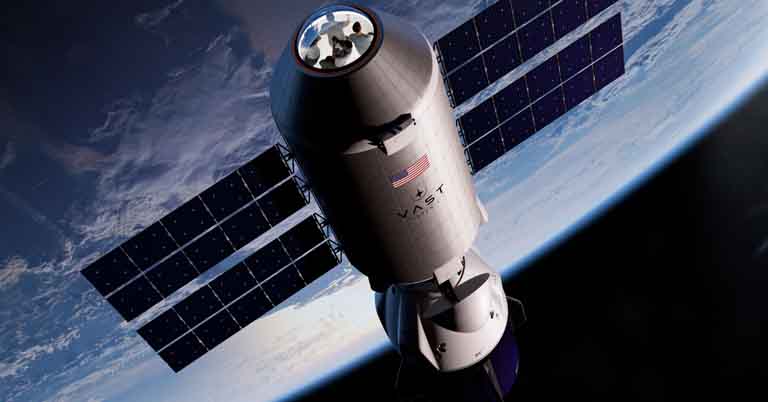
Vast Space, a newly established aerospace firm focused on expanding human presence across planets, has entered a partnership with SpaceX to create and deploy Haven-1, the world’s first private, commercially viable space station. This development arrives as NASA prepares to de-orbit the International Space Station (ISS) by 2031, prompting several private companies to compete for dominance in Earth’s low orbit.
Haven-1 Overview
Haven-1 will ride into orbit aboard SpaceX’s reliable Falcon-9 rocket and remain free-floating to operate independently. The compact station measures roughly 10 meters in length and 4 meters in width, providing sufficient living and working space for up to four crew members. It will carry its own life-support supplies, scientific instruments, a continuous WiFi connection, a dedicated 1000W power system, and a large dome optimized for photography.
Designed for compatibility with SpaceX Dragon spacecraft, Haven-1 will enable seamless crew transfers between the station and Earth. Despite its controlled environment, the station will emphasize astronaut privacy by keeping individual schedules confidential.
Vast-1 Mission Details
Following Haven-1’s deployment, the Vast-1 mission will send four astronauts to the station aboard a SpaceX Dragon capsule. SpaceX will train these crew members to conduct their duties and remain onboard for approximately one month before returning via a Crew Dragon capsule. The mission represents a valuable platform for in-space manufacturing, advanced research, and broader studies that will benefit both participants and the wider scientific community interested in future space exploration.
Commercial and Financial Strategy
Vast Space intends to sell all four seats on the inaugural launch to individuals connected with domestic and international space agency projects, although pricing details remain undisclosed. Company CEO Jeb McCaleb has stated that he will not seek external investment until the station begins generating revenue, committing $300 million of his own funds to initiate the project.
Vast envisions a long-term ambition to construct a much larger module—approximately 328 feet in length—capable of rotating to produce artificial gravity similar to lunar conditions. The company plans to test this concept through the world’s first spinning artificial gravity experiment aboard Haven-1.
Competitive Landscape
Several other private aerospace enterprises, including Blue Origin, Starlab, and Axiom, are also developing their own orbital stations, positioning Haven-1 in a crowded race for low-orbit dominance. While the proposals are captivating, industry observers recommend a wait-and-see approach, noting that many similar ambitious space projects have faced extended timelines or shifting priorities.