Understanding 5G: Benefits, Challenges, and What to Expect
Key Takeaways
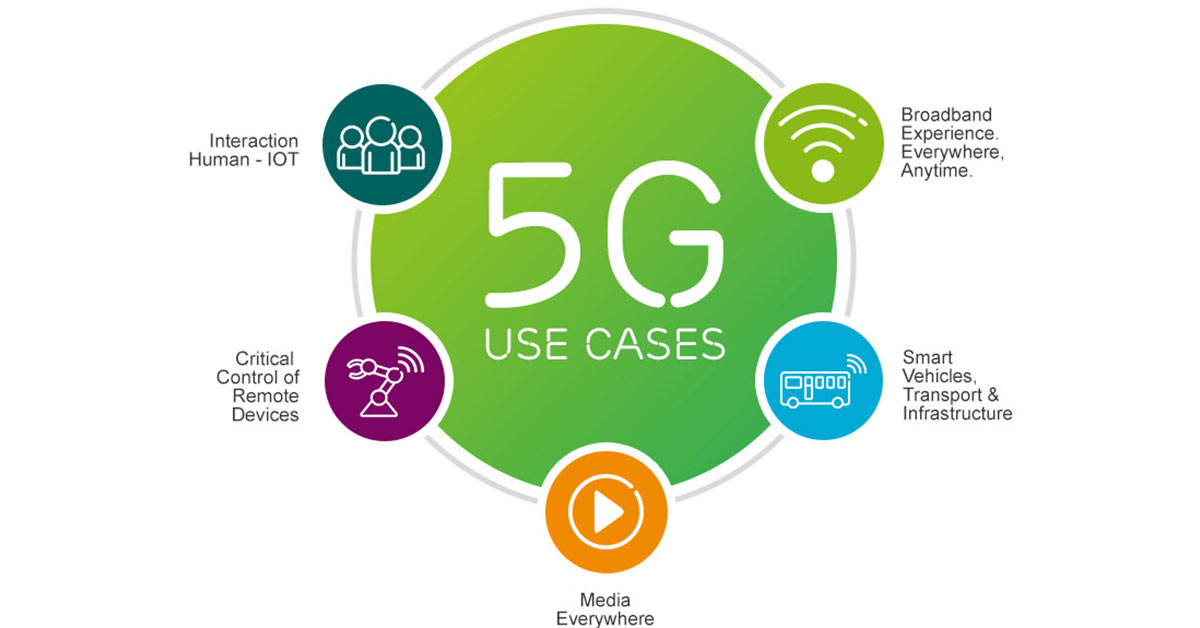
- 5G offers speeds that could rival fiber-to-the-home connections and support tens of thousands of users at once
- The technology enables near-zero latency, ideal for real-time applications like gaming
- 5G will facilitate reliable communication for Internet of Things devices
- Early 5G smartphones are expected to cost $200-$300 more than non-5G models
- Widespread adoption will take time due to infrastructure costs and technical challenges
The rollout of 5G is gathering momentum, marking the latest evolution in wireless technology and promising significant improvements over its predecessor, 4G. For those unfamiliar, 5G is the fifth generation of mobile networks, designed to deliver transformative capabilities that go far beyond simple speed enhancements.
One of the most anticipated advantages of 5G is its potential to match or exceed the performance of fiber-to-the-home connections, a feat that would represent a major leap forward. Beyond raw speed, 5G is built to manage immense user loads efficiently. In crowded scenarios, such as a stadium filled with 50,000 attendees all trying to access mobile data, current 4G networks often struggle to cope. 5G addresses this through innovative antenna technology that can assign dedicated pathways for each user, allowing a single small base station to incorporate as many as 256 tightly packed antennas. This is achieved by utilizing millimeter wave spectrum operating at frequencies ten times higher than today's 4G bands, unlocking exceptional throughput.
The technology also introduces advanced beamforming capabilities, where data signals are precisely directed toward active devices only when needed. This approach boosts spectral efficiency, extends battery life, improves coverage consistency, and raises data transmission rates across broader service areas. Unlike traditional mobile bands that remain below 3.5 GHz, 5G leverages spectrum well above 6 GHz. This higher frequency range not only drives faster data speeds but also achieves virtually zero latency—the delay between sending and receiving data packets. Reduced latency is particularly valuable for real-time applications such as online gaming, where even milliseconds of lag can impact performance.
5G's impact extends beyond human-to-human communication. It creates a robust foundation for the Internet of Things, enabling vast networks of devices to interact autonomously with minimal transmission delays. As the IoT ecosystem expands, reliable and speedy connectivity will be essential for everything from smart homes to industrial automation.
The arrival of commercial 5G smartphones is on the horizon, generating excitement about the possibilities this technology unlock. However, early adoption faces a notable hurdle: cost. Developing and deploying 5G infrastructure has required massive investment from numerous companies, and these expenses are expected to be passed on to consumers. Industry leaders such as OnePlus have indicated that their 5G models will carry a price premium of $200 to $300 compared to standard versions. Similar rumors surround Samsung's upcoming 5G devices. While the technology holds tremendous promise, widespread affordability and full market penetration will require time as networks expand and economies of scale take effect.
Despite these challenges, 5G stands out as a pivotal development with the potential to reshape how we connect, communicate, and interact with the digital world.