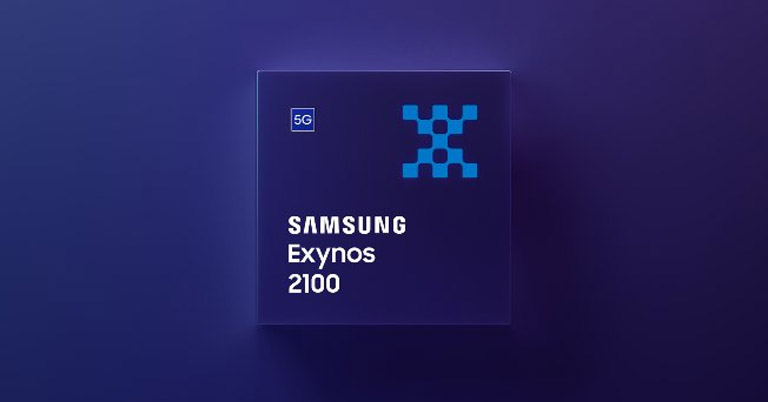
Samsung Launches Exynos 2100 Chipset Targeting Snapdragon 888
Best deals in Nepal
Finding the best deals
Checking stores across Nepal for live prices.
Key Takeaways
- The Exynos 2100 features a tri-cluster CPU setup with speeds up to 2.9GHz, promising better multi-core performance than the Snapdragon 888
- The new chip includes a Mali G78 GPU with 14 cores, claiming a 40% boost in graphics performance over its predecessor
- The Exynos 2100 supports up to 200MP camera sensors and offers advanced computational photography capabilities
- Integrated 5G modem improves power efficiency and saves space compared to the Exynos 990's external modem
- The first device to feature the Exynos 2100 will be the Galaxy S21 series, launching on January 14
Samsung has officially unveiled the Exynos 2100, its latest flagship smartphone processor, ahead of the January Unpacked event. This new chipset is set to power the upcoming Galaxy S21 series and other high-end Samsung devices. The Exynos 2100 marks a significant shift from the previous Exynos 990, aiming to address performance concerns that have plagued Samsung's in-house processors in global markets.
The Exynos 2100 is built on a 5nm EUV process, offering a 10% performance boost and a 20% reduction in power consumption compared to the 7nm-based Exynos 990. However, it still lags behind TSMC's process used in competitors like Apple's A14 Bionic and Huawei's Kirin 9000.
In a major departure from past designs, Samsung has replaced its custom Mongoose cores with Arm-based CPU cores. The Exynos 2100 features an octa-core tri-cluster setup, including one Cortex X1 core at 2.9GHz, three Cortex A78 cores at 2.8GHz, and four Cortex A55 cores at 2.2GHz. This configuration mirrors the Snapdragon 888 but with higher clock speeds, potentially offering better multi-core performance.
For graphics, the Exynos 2100 utilizes the Arm Mali G78 GPU with 14 cores, claiming a 40% performance increase over the previous Mali G77. Samsung has also partnered with AMD for future GPU solutions, though this chip still relies on Arm's technology. Performance enhancements also come from improved cache memory, a stronger scheduler, and better voltage control, resulting in a 30% overall performance gain over the Exynos 990.
The new Neural Processing Unit (NPU) adopts a tri-core design capable of 26 trillion operations per second (TOPS), matching the Snapdragon 888 and surpassing Apple's A14 Bionic (11 TOPS). The NPU also features enhanced power efficiency and will support advanced computational photography.
In the camera department, the Exynos 2100's ISP supports up to 200MP single camera sensors and configurations of up to six cameras, allowing simultaneous use of four sensors at once—more than the Snapdragon 888's three. The chip also includes a multi-frame processing engine and an AV1 decoder for 8K video support, enabling 4K 120fps recording and 8K 60fps playback.
The Exynos 2100 integrates a 5G modem directly into the chip, a first for Samsung's flagship Exynos processors. Unlike the Exynos 990, which used an external Exynos 5123 modem, this integrated approach saves space, reduces power consumption, and cuts costs. The modem supports both sub-6GHz and mm-wave 5G spectrums.
With the launch of the Exynos 2100, Samsung aims to reclaim its position in the high-performance processor market. The first device to feature this chip will be the Galaxy S21 series, set to debut on January 14. Whether it can truly challenge the Snapdragon 888 remains to be seen, but the improvements over the Exynos 990 are clear.
Key specs
| Npu | Tri-core, up to 26 TOPS |
| Process | 5nm EUV |
| Isp | Supports up to 200MP single camera sensor, up to 6 cameras total, 4 simultaneous camera use |
| CPU | Octa-core (1x Cortex X1 @ 2.9GHz, 3x Cortex A78 @ 2.8GHz, 4x Cortex A55 @ 2.2GHz) |
| Modem | Integrated 5G (sub-6GHz and mm-wave) |
| Video | 4K 120fps recording, 8K 60fps playback, AV1 decoder |
Want to compare this device with others?
Compare